


Maximise ROI and Performance with Strategic Asset Lifecycle Management

Asset Lifecycle Management (ALM) is a structured approach to managing an asset from conception to retirement – encompassing planning, acquisition, deployment, operation, maintenance and eventual disposal or replacement. Fahdli Adams, Senior Key Account Manager at FM Solutions Technical, explains: “The objective of ALM is to extract maximum value, performance and return on investment from an organisation’s assets, while keeping costs and risks under control.”
To fully realise the benefits of an asset management strategy, organisations must assess the type and criticality, and the risks posed by underperforming or failing assets, and the broader impact of frequent repairs or replacements on their operations.
When developing an asset management plan, Adams advises companies to consider five core principles:
- Planning and Design – Identifying the need, type, and specifications of an asset, aligned with the facility’s overall design and operational intent.
- Acquisition and Installation – Procuring the asset through the appropriate processes, followed by correct installation and commissioning.
- Operations and Maintenance Documents – Often overlooked, these manuals are essential to optimal lifecycle management. They include standard operating procedures, certificates of compliance and critical maintenance guidelines.
- Operation and Maintenance – Ensuring the asset performs within defined parameters through regular preventative and occasional reactive maintenance.
- Responsible Disposal of the Asset – Timely replacement of assets that are no longer cost-effective to maintain, ensuring environmentally sound disposal or recycling where applicable.
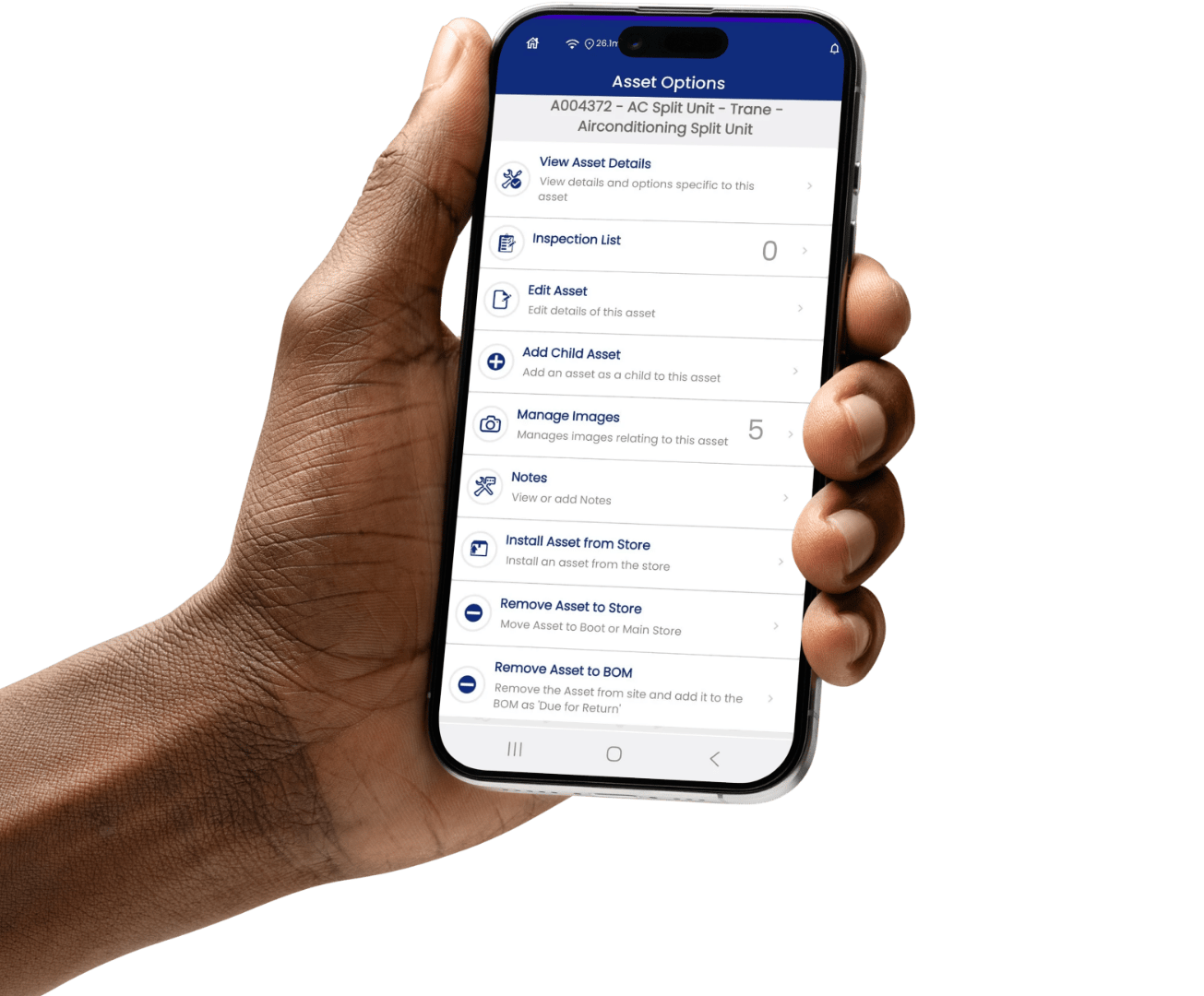
Implementing an ALM plan delivers measurable value by ensuring every stage of an asset’s life is managed to maximise reliability and efficiency. Careful planning and management minimises downtime, optimises performance and enhances operational productivity. By incorporating predictive and preventative maintenance, organisations can extend asset lifespans, avoid unnecessary replacements, and reduce overall costs.
A robust Computer Aided Facilities Management (CAFM) system further enhances ALM by delivering critical data insights that enable informed decision-making, more accurate budgeting and better resource allocation.

“We leverage our CAFM software to manage the asset lifecycle strategically, enhancing performance, improving reliability and reducing operational costs”
Fahdli Adams,Senior Key Account Manager

Well-maintained assets not only improve facility performance but also support broader organisational objectives. “Technical maintenance should never be treated as an isolated service. Developing and executing a comprehensive ALM plan allows organisations to unlock efficiencies, reduce costs, and ensure their assets consistently deliver value – both operationally and financially,” he concludes.
For more information on how to strategically manage the lifecycle of your assets, contact FM Solutions Technical on 086 000 9599


Leave A Comment
You must be logged in to post a comment.